Covington, GA · Garage Door Service
Garage Door Roller Replacement, Covington GA
Covington homes built from 1938 to 2002 are wearing out original steel rollers. Here's why, how it shows up, and what roller replacement actually involves.
- Repairs & new doors
- Springs & openers
- Serving 4 nearby communities
Doing It Yourself
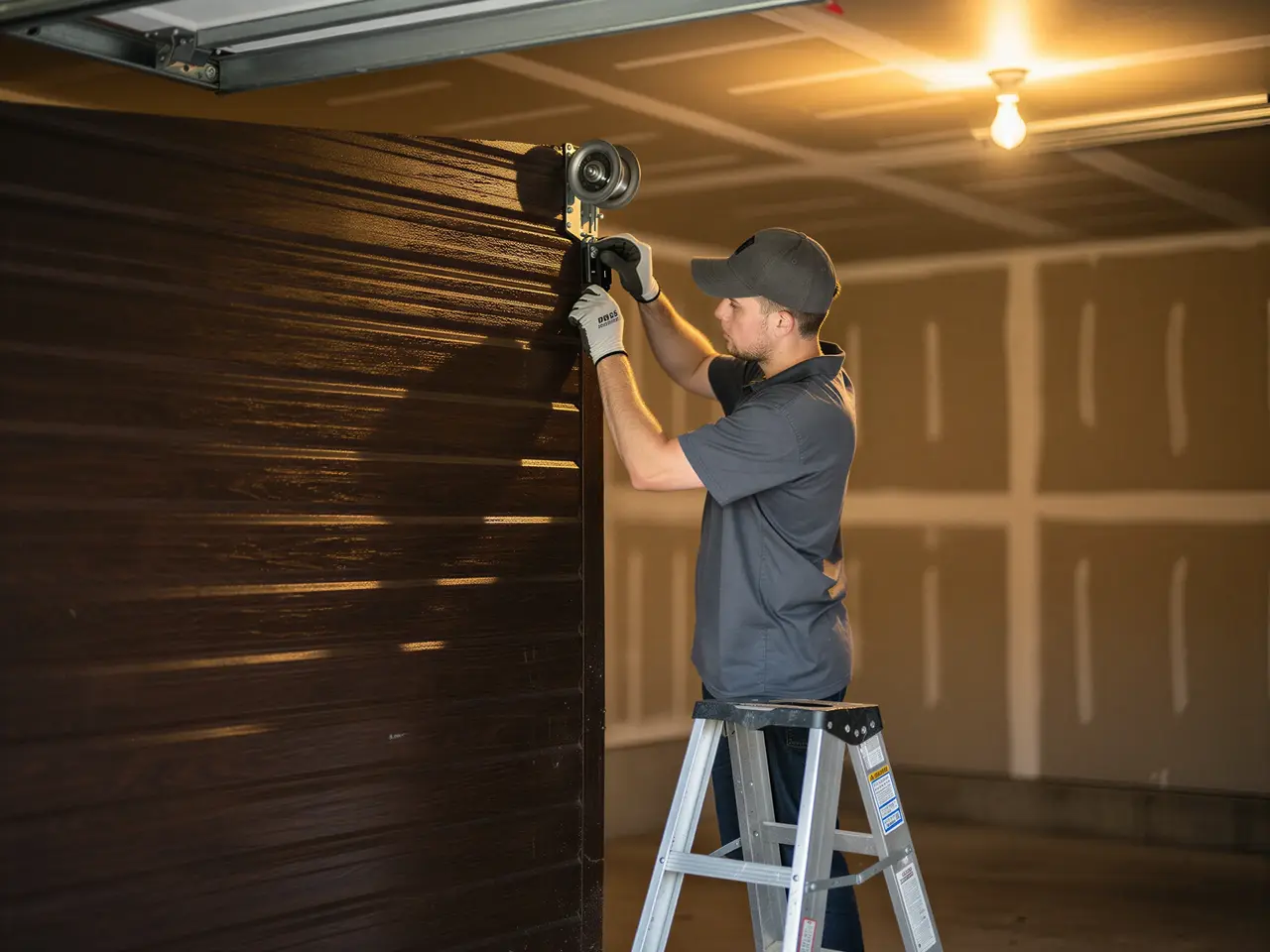
Rollers are one of the few garage door jobs a homeowner can reasonably take on. The wheel pops out of the hinge bracket, you slide the new one in, and if your door is low to the ground you might get through all ten rollers on a stepladder in an afternoon. Nylon replacements are cheap and quiet compared to steel, and that upgrade alone fixes most of the grinding noise people call us about.
Where it stops being a DIY job is the top roller on each side, the one that rides inside the horizontal track near the spring. Pulling that roller means loosening the track, and a torsion spring under load is close enough that we don't recommend it without the right bars and a second set of hands. We also won't talk anyone through spring work over the phone - that's the one limitation we're upfront about, because a slipped bar there can break a hand or worse.
If your rollers are original steel and the door is from the 1980s or 90s stock common in this area, replacing all of them at once usually costs less than doing it in two visits, since the track adjustment is most of the labor either way.
What Causes It Around Here
Covington's housing stock runs from 1938 to 2002, with the median home built in 1983, so a lot of garage doors are rolling on the original steel rollers from the Reagan era. Across the nine mapped neighborhoods that make up this service area, most homes date to the 1980s and 90s, which is exactly when steel rollers without sealed bearings were standard equipment on builder-grade doors.
Those rollers were built to last maybe ten to fifteen years of daily cycling before the bearing surface pits and the wheel starts riding unevenly in the track. Forty years later, plenty of them are still in there, just loud and slightly out of round.
This part of Georgia sits in a cold-moderate climate band, so the door sees enough freeze-thaw swing each winter to work grease out of an old roller stem and let surface rust start on the bearing. That's not a dramatic failure, it's a slow one - the roller gets stiffer, drags more, and starts chewing a groove into the track edge if nobody catches it. By the time a homeowner hears the grinding, the track usually needs a light dressing too, not just new rollers.
How It Shows Up
The first sign is almost always sound - a rhythmic grind or squeal timed to the door's travel, worse on a cold morning before anything's had a chance to warm up and loosen. Steel rollers in an old track tend to announce themselves well before they fail outright.
Next comes a visible wobble at one corner of the door as it moves, which usually means that roller's bearing has worn unevenly and the wheel isn't sitting flat in the track anymore. Leave it long enough and you'll see shiny wear marks or light scoring on the inside edge of the track itself, where a pitted roller has been grinding a path instead of rolling smooth.
In the worst cases a roller stem snaps clean, usually the top one near the spring, and the door jams at an angle or won't move at all. That's the call that comes in as an emergency, though most roller wear gives plenty of warning before it gets there.
How Long You Are Without the Door
A straight roller swap on an accessible door - the kind where none of the hardware is seized or bent - is a same-visit job start to finish. The door goes back into full use the moment the last roller is seated and the track's been checked for square.
It takes longer when the track itself has to come off the wall to true up a bend, or when one of the top rollers near the spring has been dragging long enough to chew into the bracket, which sometimes means replacing the bracket along with the roller. Those are still same-day repairs in most cases, just a longer one.
The door is rarely left non-functional overnight for a roller job alone - that's more a spring or opener situation. If you're hearing the grind now, the honest move is to get it looked at before a stem snaps and turns a planned roller swap into an unplanned one where the door won't open at all.
Frequently asked questions
How many rollers does a typical garage door have?
Most residential doors have ten rollers, five on each side, though a single-panel door might have fewer. On the 1980s and 90s builder-grade doors common in this area, all ten are usually the same age and wear out close together, which is why we often recommend doing the full set rather than one at a time.
Are nylon rollers worth the upgrade from steel?
For most homes here, yes. Nylon rollers with sealed bearings run quieter and don't need the same lubrication schedule as the steel rollers that shipped on older builder-grade doors. They cost a bit more per roller but last longer under the freeze-thaw cycling this climate band puts on a garage door each winter.
Can a bad roller damage the track?
It can. A pitted or out-of-round roller rides unevenly and can score the inside edge of the track over time. If you catch it early it's just a roller swap. Wait too long and you may also need the track dressed or straightened, which adds labor but is still usually a same-day fix.
Do you serve areas outside Covington itself?
Yes, this service covers the surrounding area, including Oxford, Porterdale, Social Circle, Walnut Grove, Rutledge, Between, Monroe, Lithonia, and Good Hope, alongside Covington proper.
Related services
By Neighborhood
Roller Replacement across the Covington area
We also handle roller replacement in these Covington-area suburbs.
Book garage door service in Covington
Call now or request a quote - tell us what the door is doing and where you are.