
Covington, GA · Garage Door Service
What We Actually Check When We Come Out
A breakdown of what we actually check on a Covington service call, built around the age of the housing stock here and our cold-moderate winters.
- Repairs & new doors
- Springs & openers
- Serving 4 nearby communities
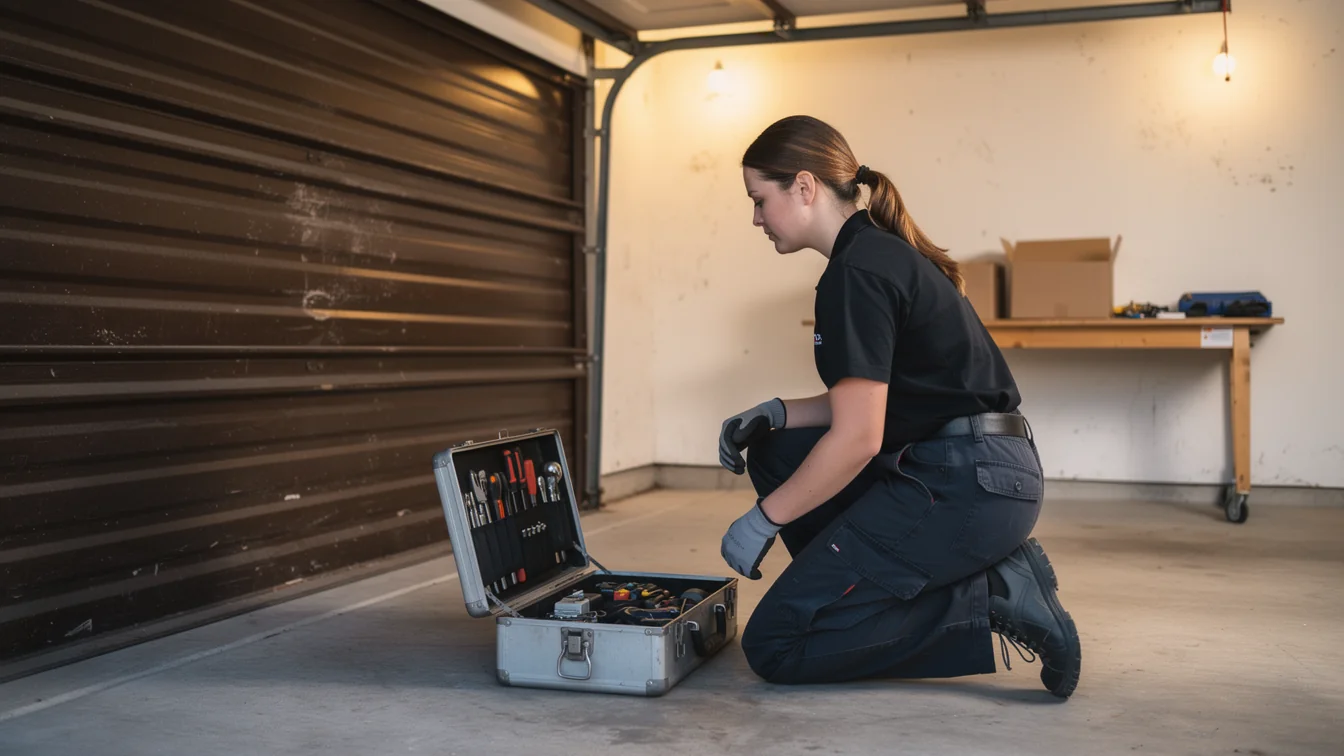
What the Weather Here Does to It
Covington sits in a cold-moderate climate band, not the deep freeze of the mountains and not the mild coast. That matters more than most homeowners think. The swing between a humid summer and a handful of hard-frost mornings each winter is what actually wears out a garage door system - not one big storm, but years of expansion and contraction on steel components. Torsion springs lose tension faster when they go through repeated temp swings, and galvanized hardware on older doors starts to show surface rust at the coil ends and the bottom bracket, even when the rest of the door looks fine. On a service call we're looking at how the door has aged against this climate, not against a textbook. A door that's 20 years old in a place with real winters and real humid summers has earned more wear than the same door sitting in a dry, stable climate for the same stretch of time.
The Problem
Housing in the service area was mostly built between 1938 and 2002, with the median landing around 1983, and most of what we see across the nine areas we cover is 1980s and 90s stock. That means a lot of original torsion springs, original openers without rolling-code safety reversal, and steel tracks that were never upgraded when the house changed hands. A door from that era wasn't built wrong - it was built to the standard of its day. The problem is that standard is 30 to 40 years old now, and the spring inside it was only rated for so many open-close cycles. When we get a call about a door that 'just stopped' or 'got loud,' nine times out of ten the root cause traces back to a part that's simply reached the end of a lifespan nobody was tracking, on a door the current owner may not have even installed.
What to Look At First
On a call like this, we start at the spring and work out. First the torsion spring itself - coil gap, any flat spots, rust at the stress points near the winding cone. Then the cables running off the bottom brackets, since a fraying cable on an older setup is often the first visible sign something's about to go. After that, the rollers and track alignment - in houses built before the 2000s the track was often set with less tolerance than current installs, so even mild shifting in the foundation over 30-plus years can throw it out. Last is the opener itself: if it's original to a house built in the 80s or 90s, it predates current safety-reversal standards, and that alone is worth flagging even if the door is running fine. We check these in that order because it's the order things actually fail in on housing stock this age.
When Waiting Is Fine
Not everything we find needs action that week. A spring with light surface rust but no flat spots or gap irregularity can run another season - we'll say so rather than sell against it. A noisy roller on an otherwise sound track is usually a lubrication fix, not a replacement. Where we won't tell you to wait is an opener from the original 80s or 90s install with no modern safety reversal, or a cable showing visible fraying, because those are the two things that turn into a bigger problem fast rather than slow. One honest limit on our end: we don't stock every part for every opener model from that era on the truck, so if your unit is original to a house built in '83, there's sometimes a short wait on the exact replacement part. We'll tell you that up front instead of after the fact.
Frequently asked questions
Why does my garage door act up more in the winter here?
Covington's cold-moderate climate means real temperature swings between seasons, and torsion springs and steel tracks respond to that over time with tension loss and surface rust at stress points. It's less about any single cold snap and more about the cumulative cycling, especially on doors original to houses built in the 1980s or 90s.
Is my original opener actually a safety issue?
If your house was built in the median range for this area, around 1983, and the opener is original, it likely predates current rolling-code and safety-reversal standards. It may still function, but we flag it on every call because the safety gap is real, not cosmetic.
Do you serve areas outside Covington itself?
We cover the surrounding service area, including Oxford, Porterdale, Social Circle, Walnut Grove, Rutledge, Between, Monroe, Lithonia, and Good Hope, which share a similar mix of 1980s-90s housing stock and the same cold-moderate climate conditions.
Related garage door services in Covington
More garage door guides
Book garage door service in Covington
Call now or request a quote - tell us what the door is doing and where you are.