
Covington, GA · Garage Door Service
Garage Door Service for Covington's 1980s and 90s Housing Stock
Covington homes built mostly in the 1980s and 90s are hitting the age where springs, openers, and hardware fail together. Here's what that looks like and what to do first.
- Repairs & new doors
- Springs & openers
- Serving 4 nearby communities
Doing It Yourself
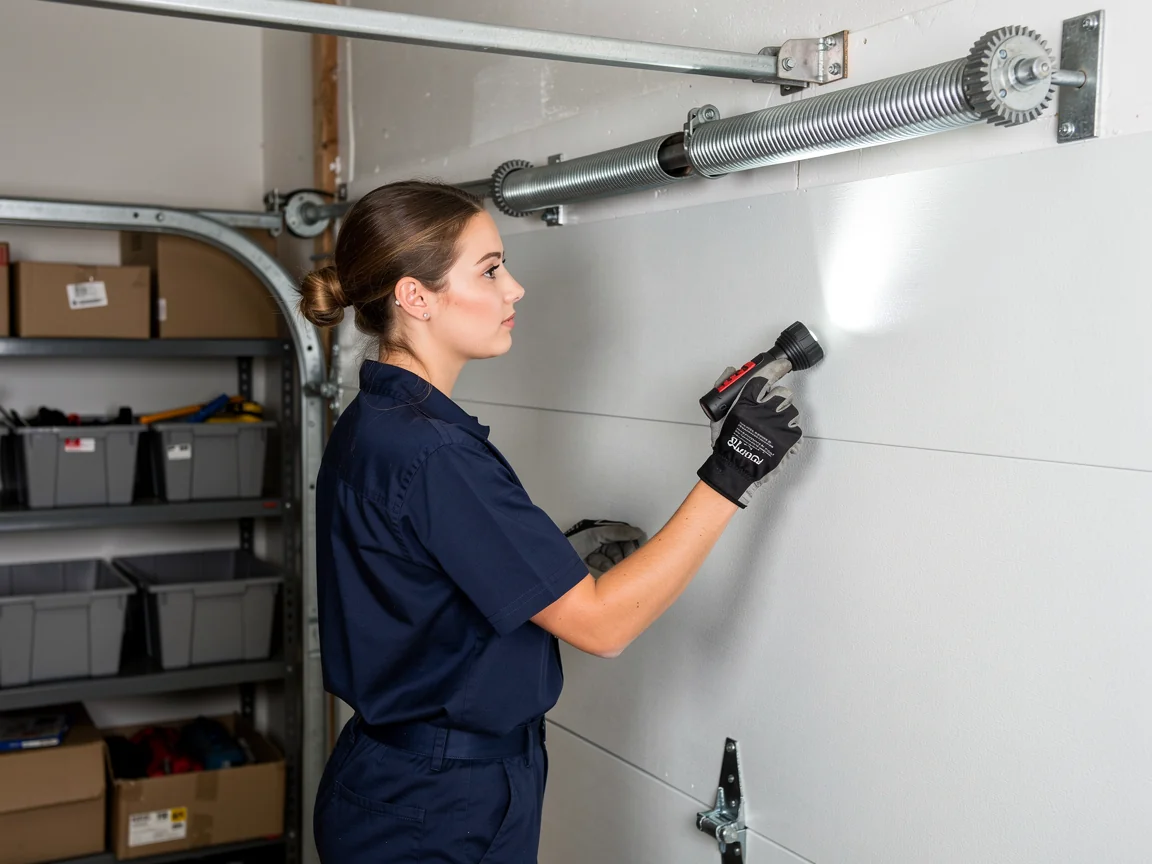
There's a short list of things worth doing before you call anyone. Pour a little silicone-based lubricant on the rollers and hinges, not the track itself, and work the door by hand a few times. Check the two cables running down each side of the door for fraying - if you see broken strands, stop and leave it alone. You can also test the auto-reverse safety feature by setting a 2x4 flat on the ground under the door and running it down; it should bounce back on contact. What you should not do is touch the torsion spring above the door. That spring is holding the full weight of the door under tension, and on houses built in the 1938-2002 range common around Covington, those springs are often original or close to it. A spring that lets go while you're working on it can break fingers or worse. If the door won't move, or moves unevenly, or the opener strains and reverses on its own, that's a call, not a weekend project.
What Causes It Around Here
Most of the housing in the Covington service area went up between 1938 and 2002, with the bulk of it dating to the 1980s and 90s across the nine areas we work in. That means a lot of garage doors and openers are now 25 to 40 years old - past the point where springs hold their rated cycle count and chain-drive openers start grinding instead of running smooth. Add in a winter that counts as cold-moderate for this part of Georgia: temperatures swing enough overnight that steel springs contract and stiffen, grease thickens in the track, and the wood jambs that a lot of these older doors are mounted to shrink and swell with the season. None of that is dramatic on its own, but on a door that's already 30 years old it's usually the thing that tips a worn part into a broken one. We see this pattern most on the original torsion springs and the first-generation openers that came with houses built in that median-1983 window.
How It Shows Up
The most common call is a door that won't open at all, usually a torsion spring that's snapped - you'll hear it as a loud bang from the garage, often in the early morning when the metal is coldest. Short of a full break, you'll notice the door getting heavier to lift by hand, or the opener motor straining and clicking off partway through a cycle. Cables can fray at the drum where they wrap, which shows up as the door hanging crooked on one side. On older openers from the 1980s and 90s builds common here, the gear-and-sprocket assembly wears down and you'll hear a grinding sound a few seconds before the door actually moves, or sometimes the opener runs but the door doesn't follow at all because the drive mechanism has stripped out.
How Long You Are Without the Door
A torsion spring replacement is usually a same-visit fix once we're on-site with the right spring size for your door's weight and width - most of these jobs don't require ordering a part first. Opener repairs depend on what's wrong: a worn gear kit is often in stock, but if the whole opener needs replacing because the circuit board is shot, that's a different timeline and we'll tell you honestly if a repair isn't worth it versus swapping the unit. One limitation worth saying plainly: on some of the older 1980s builds, the original opener model is long out of production, so a repair means adapting newer parts to older hardware, and that takes longer than a straight swap would on a newer system.
Frequently asked questions
Why did my garage door spring break overnight?
Torsion springs lose strength with every open-and-close cycle, and on a house from the 1983 median build era common in Covington, a lot of springs are near the end of their rated life. Cold nights make steel contract and stiffen, which is often the last push on a spring that was already close to failing.
Is it normal for an older opener to grind before the door moves?
That grinding is usually a worn gear or sprocket inside the opener housing, common on units from 1980s and 90s builds that are still running their original motor. It's not dangerous by itself, but it usually means the gear kit is close to stripping out completely.
Can I replace a garage door spring myself?
We don't recommend it. A torsion spring holds the full weight of the door under tension, and releasing or winding one without the right bars and technique can cause serious injury. Cables, rollers, and lubrication are fine for a homeowner to handle; the spring itself is not.
Related services
Related guides
By Neighborhood
Garage Door Service across the Covington area
We also handle garage door service in these Covington-area suburbs.
Book garage door service in Covington
Call now or request a quote - tell us what the door is doing and where you are.