
Covington, GA · Garage Door Service
What an Uninsulated Garage Door Costs You in a Covington Winter
Covington homes mostly date to the 1980s and 90s, before insulated doors were standard. Here's what that means for your garage in a cold snap and what to check first.
- Repairs & new doors
- Springs & openers
- Serving 4 nearby communities
What the Weather Here Does to It
Covington sits in a cold-moderate climate band, which means the garage door on your house has to handle real temperature swings, not just rain. That matters more here because the housing stock runs old - built between 1938 and 2002, with a median build year of 1983. A door installed on a house from that era was almost never insulated as standard. Builders in the 80s and 90s hung single-layer steel or wood doors because insulated panels weren't the default spec yet, and nobody retrofitted them unless the door failed outright.
What you get now is a door that transfers cold straight into the garage, and if that garage shares a wall with living space (a laundry room, a bonus room over it, an attached mudroom), that cold shows up in your utility bill. It also means condensation on the inside of the panel on a cold morning, which over the years rusts out the bottom section first. None of this is dramatic. It's slow, and it's the kind of thing you don't notice until the door starts sticking in January.
The honest limitation here: insulation alone won't fix a door that's also out of adjustment or running on worn rollers. Cold just exposes problems that were already there.
The Problem
Most of the garage doors we look at that are causing trouble trace back to the same root: they were built before anyone expected insulation to matter, and they've had 30-plus years to show it. With a median house age putting construction right around 1983, a lot of doors in this area are original or close to it - steel skins with no thermal break, wood doors with no vapor barrier, and weatherstripping that was never designed to seal against the kind of temperature swing a cold-moderate winter brings.
The practical problem isn't that the door looks old. It's that an uninsulated panel flexes more with temperature change, and that flex works on the hardware - hinges, the bottom bracket, the track alignment - faster than it would on a modern insulated door with a stiffer panel. So you don't just get a cold garage, you get a door that's harder on its own springs and opener, because it's doing more physical work every time it opens and closes in the cold.
We're not going to tell you every door from this era needs replacing. Plenty are fine structurally and just need the weatherstripping redone and the hardware adjusted. But if the panel itself is original to a house built in the 80s, it was never insulated to begin with, and that's worth knowing before you spend money chasing a draft that the door was never built to stop.
What to Look at First
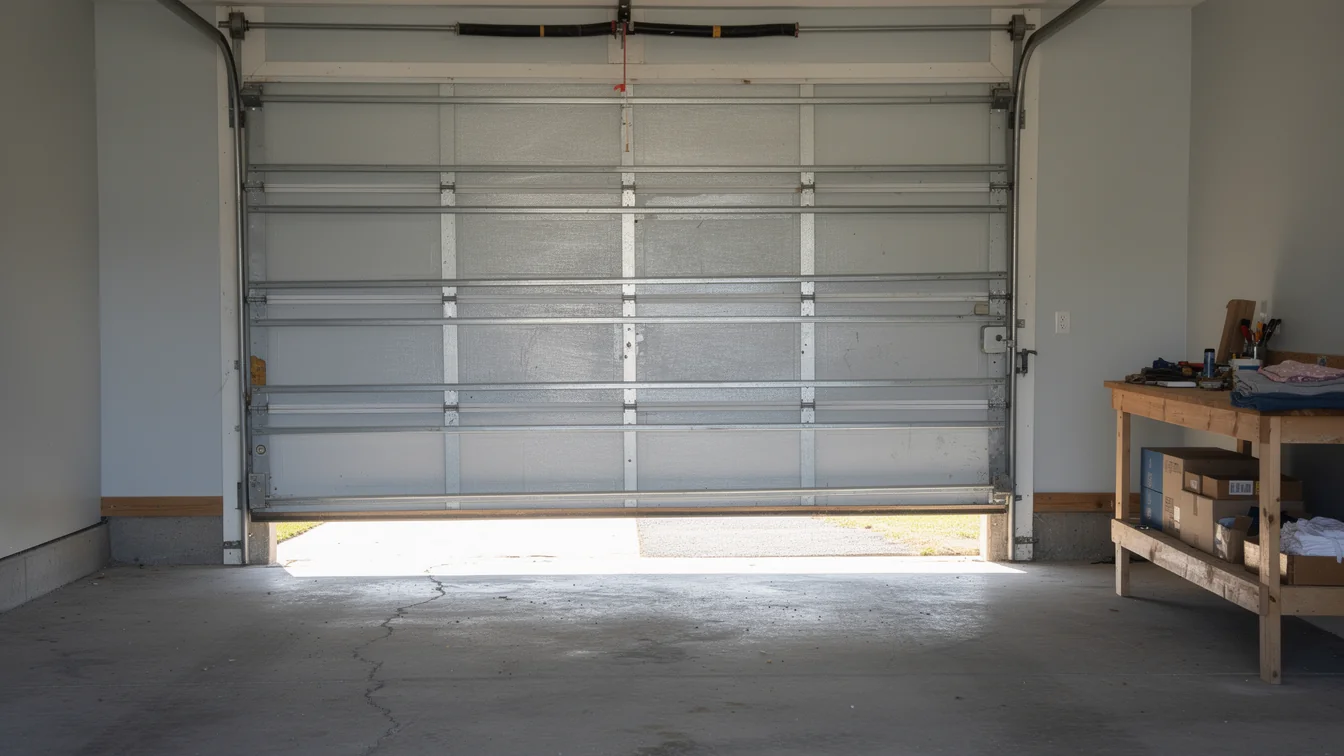
Start at the bottom panel, not the top. On doors from this era, the bottom section takes the most moisture and temperature stress, so it's usually the first to show rust streaks at the seams or a warp you can see by sighting along the bottom edge with the door closed. If that panel has gone soft or the steel skin has separated from the frame, insulating it won't help - it needs replacing.
Next, check the weatherstripping at the bottom and sides. On a door old enough to predate insulation standards, the strip has usually hardened and cracked rather than just worn flat, which means it's letting air through even when it looks intact from a few feet away.
Then look at where the garage meets the house. If there's a shared wall with living space, that's where an uninsulated door costs you the most in heating, and it's worth knowing before you decide whether to insulate the existing panels or replace the door outright.
Last, check the springs. A heavier retrofit insulation kit adds weight to a door that was never sprung for it, and in a household budget averaging around $58,600 a year in this area, a spring failure from mismatched weight is a cost nobody wants to discover in February.
When Waiting Is Fine
Not every uninsulated door needs attention right now. If the garage is detached, unheated, and doesn't border living space, the cold-weather cost of skipping insulation is low - you're not losing heated air anywhere, you're just living with a cold garage, which is normal for a lot of the properties out this way.
If the panels are sound, the hardware is adjusted, and the only issue is that the door is a single uninsulated layer, that's a comfort decision, not a repair one. Plenty of homeowners run that setup for years without a failure. Where we'd tell you to wait: cosmetic rust on the face of a panel that hasn't gone through to the steel, or a door that's merely old but still balances and seals properly. Spending money there before something actually fails doesn't buy you much.
Where we wouldn't wait: a bottom panel that's visibly separated or rusted through, since that's structural and gets worse fast once cold and moisture get inside the seam. We serve the area around Covington, including toward Oxford, Porterdale, and out to Social Circle, and the age of the housing stock is fairly consistent across that stretch, so this same call applies whether you're close in or further out.
Frequently asked questions
Is it worth insulating an old garage door instead of replacing it?
Depends on the panel condition. If the steel or wood is still sound and just uninsulated, a retrofit kit can help, but it adds weight the original springs weren't sized for, so expect to have the spring tension checked at the same time. If the bottom panel is rusted or warped, insulating it is wasted money - replace it instead.
Why does my garage door feel colder than it used to?
If your house dates to the 1980s or 90s like most in this area, the door was likely never insulated to begin with. What's changed is usually the weatherstripping - it hardens and cracks over the decades, so a door that used to seal reasonably well now lets more cold air through the same gaps it always had.
Does an uninsulated door actually affect my heating bill?
Only meaningfully if the garage shares a wall or ceiling with heated living space. A detached or isolated garage with an uninsulated door mostly just stays cold, which doesn't hit your bill directly. Attached garages with a laundry room or bonus room above are where the cost shows up.
Related garage door services in Covington
More garage door guides
Book garage door service in Covington
Call now or request a quote - tell us what the door is doing and where you are.