
Covington, GA · Garage Door Service
When a Spring Goes in Cold Weather in Covington
Why Covington's 1980s-90s housing stock sees more torsion spring snaps when temperatures drop, what to check first, and when to just wait it out.
- Repairs & new doors
- Springs & openers
- Serving 4 nearby communities
What the Weather Here Does to It
Covington sits in a moderate cold climate band, which means the swings matter more than the extremes. You don't get the deep freezes that crack foundations, but you get enough cold snaps to shrink the steel in a torsion spring just enough to add stress to metal that's already fatigued. A spring doesn't care that it's 38°F instead of 20°F below zero. It cares that it went from a 70°F garage day to a cold morning, over and over, for years.
Most of the housing stock here was built between 1938 and 2002, with the median landing around 1983. That matters because a spring installed when a house went up in the early 1980s has had four decades of these seasonal cycles to work through. Across the nine named areas that make up most of the service territory, the bulk of homes date to the 1980s and 90s, which puts a lot of original or first-replacement springs right at the age where cold-weather failure gets common. It's not the cold that breaks the spring. It's the cold finding the weak point that decades of cycling already built in.
The Problem
A torsion spring stores energy by twisting. Every open and close cycle flexes the coil, and over years that flexing fatigues the steel at a microscopic level, usually starting at one end near the winding cone. Cold makes steel slightly less ductile, so the same flex that a spring shrugged off in July can be the one that finally separates it in January.
This isn't a defect you can predict by looking at the spring. It looks fine until the morning it doesn't. What's different in Covington is the age distribution of the housing stock, because 1980s and 90s construction means a lot of springs are now in the 25-to-40-year range, which is past the realistic service life of most torsion springs regardless of brand. Combine that with the kind of cold-morning temperature swings this area gets a handful of times each winter, and you get a predictable bump in snapped springs right when homeowners least want to be standing in a cold driveway trying to figure out why the door won't budge.
What to Look At First
If your door won't open and you hear or heard a bang, don't force the opener. A broken spring means the door has no counterbalance, and the opener isn't built to lift that weight alone. You'll burn out the motor or bend the track trying.
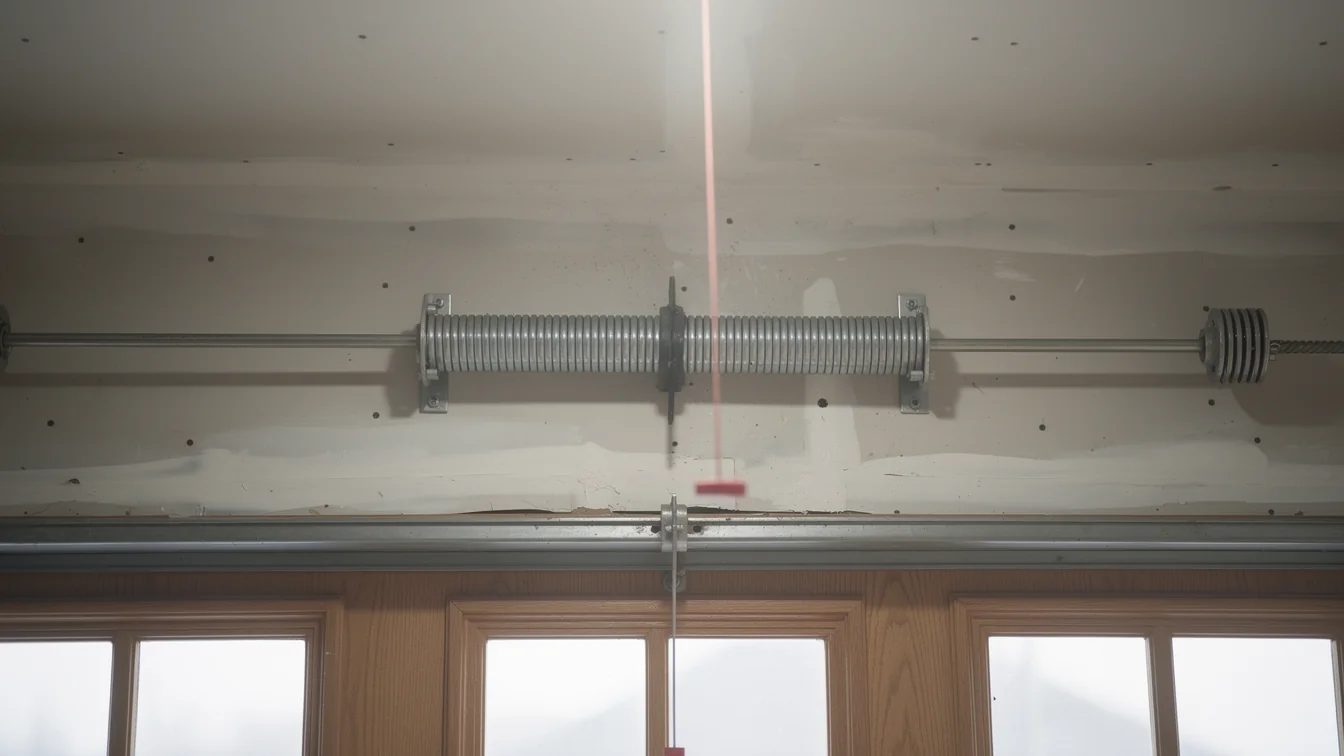
First, look at the spring itself, above the door on the torsion bar. A visible gap in the coil is the giveaway. Second, check the age of the system if you know it. On a house built in the 1983-to-1990s range common across this area, a spring that's original to the house or to the opener install is well past due regardless of the cold. Third, check whether one spring broke or you're running on a single-spring setup to begin with. Older homes in this age bracket sometimes have single-spring systems that newer code and newer installs don't use anymore, and those carry more load per spring, which matters in cold weather.
Don't try to adjust or unwind a torsion spring yourself. The tension involved has put people in the hospital. That's not a scare line, it's the one honest limitation worth stating plainly here.
When Waiting Is Fine
Not every cold-weather symptom means a spring is about to go. If the door feels a little heavier to lift by hand on a cold morning but still opens and closes fine on the opener, that's normal steel behavior, not a failure in progress. You don't need an emergency call for that.
If the door is slow to respond or the opener strains slightly in the cold but completes the cycle, it's reasonable to watch it for a week or two rather than treat it as urgent. Lubricant thickening slightly in cold temps is common and usually resolves once things warm up during the day.
Where it's not fine to wait: any grinding noise from the spring area, any visible gap in the coil, or a door that won't move at all. Given how much of the housing stock here is already in the age range where original springs are near end of life, a cold-weather symptom that would be minor on a newer spring deserves faster attention on a house built in the 1980s or earlier.
Frequently asked questions
Why do more springs break in winter here in Covington?
It's less about Covington being extremely cold and more about the temperature swings in a moderate cold climate band stressing steel that's already fatigued. A lot of the local housing stock dates to the 1980s and 90s, so springs installed then are old enough that a cold morning is often what finally finishes them off, not what caused the underlying wear.
Is it safe to drive the opener if I think the spring broke?
No. If a spring is broken, the door has no counterbalance and the opener wasn't built to lift that weight alone. Running it anyway risks burning out the motor or bending the track. Leave the door as-is until the spring gets replaced.
My house was built in the early 1990s. Is the spring original?
It might be. Torsion springs typically don't last 30+ years of cycling, so a spring installed when a 1990s-era Covington-area house was built is well past typical service life regardless of how it looks. Age alone, on housing stock this old, is a reason to have it checked before it fails on its own schedule.
Can I just wait until spring to deal with a stiff door?
If the door still opens and closes fully and you just notice it's heavier by hand, waiting is reasonable. If you hear grinding, see a gap in the coil, or the door won't move, that's not a wait-and-see situation regardless of season.
Related garage door services in Covington
More garage door guides
Book garage door service in Covington
Call now or request a quote - tell us what the door is doing and where you are.