
Covington, GA · Garage Door Service
Garage Door Repair for Oxford's 1969-Era Doors
Oxford's houses mostly date to 1969, a decade before Covington's service-area median. We travel 2 miles from Covington to fix the original hardware still on most of these doors.
- Repairs & new doors
- Springs & openers
- Serving 4 nearby communities
Parts We Carry
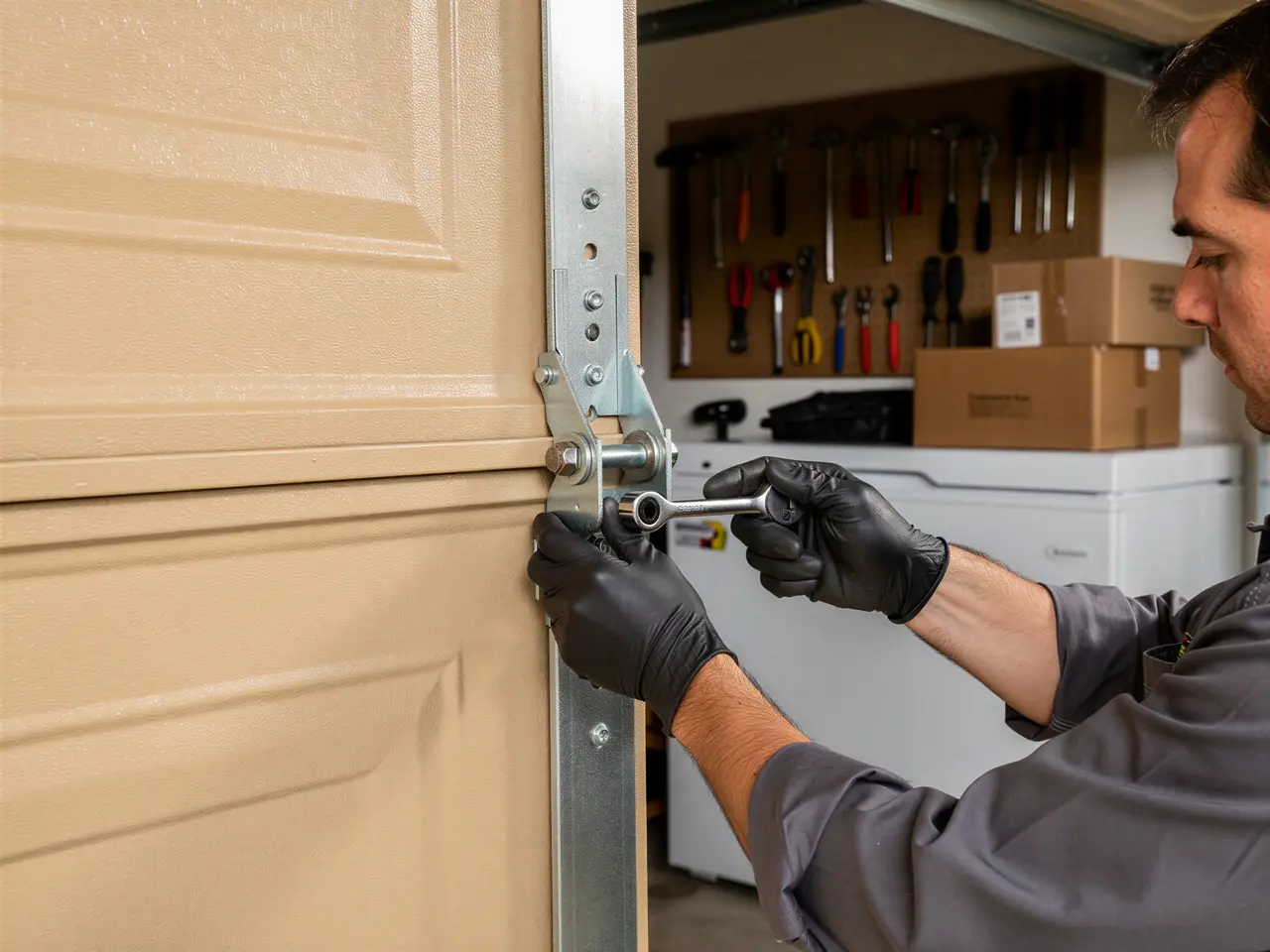
Oxford sits about 2 miles from our shop in Covington, and the houses here skew older than the 1983 median across the rest of our service area - most went up around 1969. That matters because a door installed in 1969 has had roughly five decades to wear through every moving part at least once, but a lot of homeowners never touch the spring or the track until something snaps. We carry torsion springs sized for the heavier wood and early steel sectional doors common on builds from that era, along with the galvanized lift cable and the flat-wound extension springs that showed up on a lot of houses before torsion hardware became standard. Rollers from this period are usually steel, not nylon, and they're loud and gritty by the time we get the call. We stock those too, plus the stamped-steel hinges that crack at the corners before anything else on the door gives out. What we don't stock is anything proprietary to a specific builder-grade opener from the 1990s or later - if your opener is newer than your door, which happens a lot in this area, we'll order that part rather than guess at what's on the truck.
What Causes It Around Here
A door built around 1969 was engineered for a lighter household load than what gets put on it now - a second freezer, a workbench, storage shelving bolted straight into the track brackets. That extra weight, sitting on hardware that's 50-plus years old, is the single biggest driver of calls we get in Oxford. The cold-moderate winters in this part of Georgia aren't brutal, but they do put the yearly freeze-thaw cycle on metal track brackets and lag bolts that were torqued into framing before anyone thought about seasonal expansion. Add in a median household income of $58,594 across the area, and what we see most often isn't neglect - it's a door that got patched instead of replaced because replacement wasn't in the budget that year. The patch holds until the next thing goes, and by then two or three components are tired at once.
Doing It Yourself
If a roller is squealing or a hinge is loose, a homeowner can usually handle lubrication and a bolt tightening safely. What you shouldn't touch on a door from this era is the spring. On houses built around 1969, the torsion spring - if the door was ever upgraded from the original extension setup - is often under more tension than modern residential kits, and the winding cones are old enough that they can be brittle rather than just stiff. We've seen cones shear mid-adjustment. If your door won't open, or opens unevenly, or the cable looks frayed anywhere along its length, that's a call, not a weekend project. Checking the track alignment and cleaning the tracks is fine to do yourself with the door closed and the opener unplugged.
How Long You Are Without the Door
We don't carry every part for every build year on the truck, because a door original to 1969 can need a spring size or a hinge gauge that newer stock doesn't match. On a straightforward roller or cable repair, we're usually done the same visit. On a spring replacement for older hardware, or anything where we need to special-order a part that matches what's already on your door, you're looking at a return trip once the part is in. We'd rather tell you that up front than promise a same-day fix on something we don't have in hand.
What the Fix Involves
Most jobs on a door this age start with a full hardware check, not just the part that failed - if the spring is original, the cable and the rollers are probably close behind it, and fixing one without looking at the rest just means another call in a year. We check torque on the bolts into the framing, since houses from 1969 often used lag screws that have backed out slightly over the decades. If the door itself is sound but the opener is a later addition, we test that the two are actually matched - a common mismatch in older Oxford homes where the opener got swapped out in the 90s or 2000s but the door never did. Where the track brackets have rusted past safe reuse, we replace them rather than re-seat them; that's not a judgment call we make lightly, but reusing a corroded bracket on a door this heavy isn't worth the risk.
Frequently asked questions
Is my garage door original to my house if it was built around 1969?
It's possible, especially if no one's mentioned a replacement. A lot of Oxford homes from that era still run the original spring and hinge hardware, even if the opener was added or swapped later. We check the hardware stampings and spring winding to tell you what's original versus what's been touched.
How far do you travel to reach Oxford?
We're based in Covington, about 2 miles away, and Oxford is part of our regular service area. We don't keep a branch or crew stationed in Oxford itself - the truck comes from Covington for every call.
Do you carry parts for older torsion springs on the truck?
We carry common sizes, but a door original to 1969 sometimes needs a spring or cone size that isn't standard stock. If what's on your door is older hardware, we may need to order the exact match before the second visit.
Why does my door feel heavier than it should?
Doors built in the late 1960s were sized for lighter loads than most garages carry now. Add storage, shelving, or a second appliance and the spring that was correct in 1969 is often undersized for what the door carries today.
Book garage door service in Covington
Call now or request a quote - tell us what the door is doing and where you are.